Managing dry eyes before laser surgery
Why ocular surface health is critical to achieving the best possible refractive outcome.
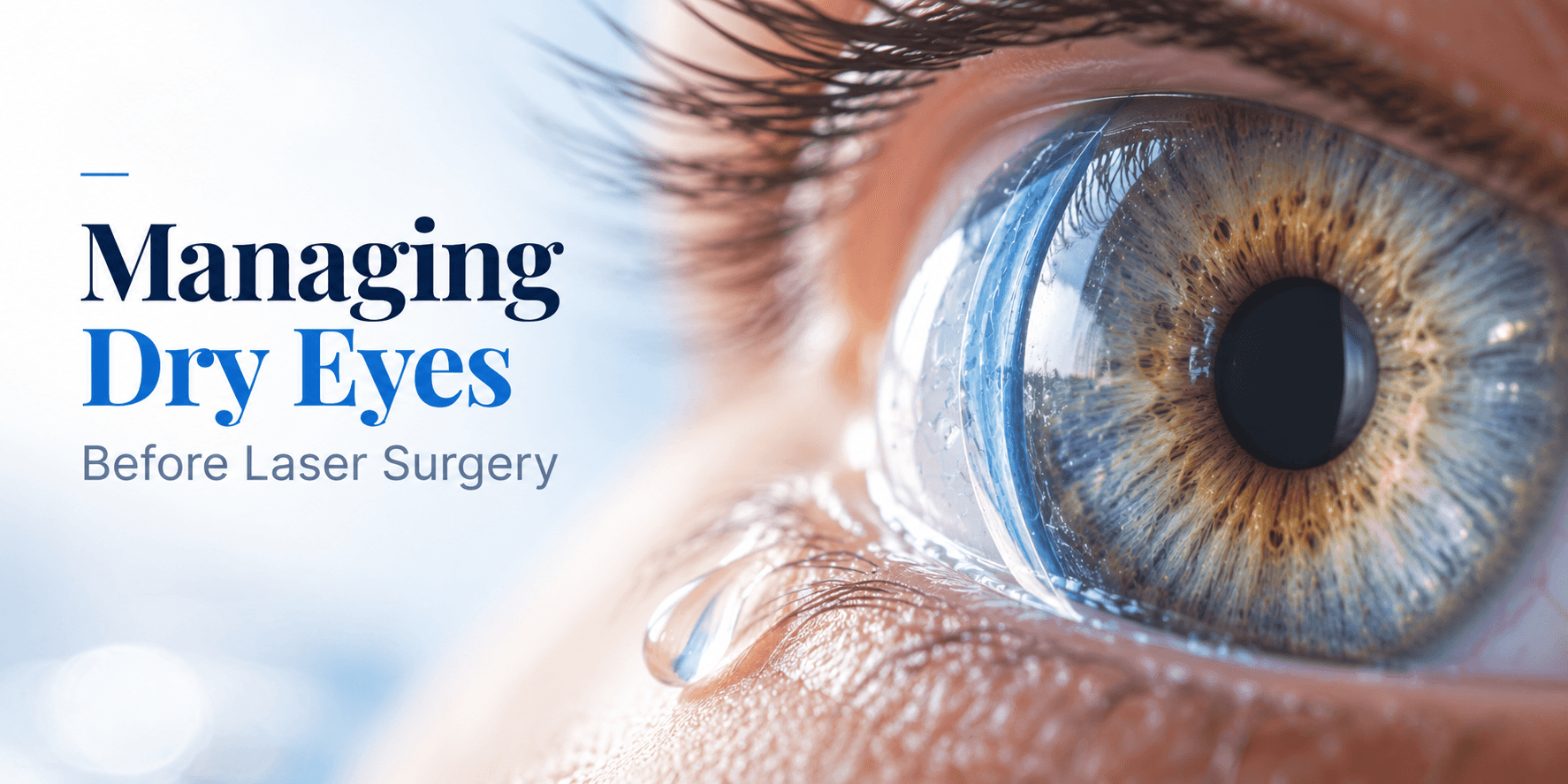
[{"type":"p","text":"The ocular surface is the first refractive medium of the eye. Light passes through the tear film before it hits the cornea. If the tear film is unstable, optical quality degrades, leading to blurry or fluctuating vision."},{"type":"h2","text":"Impact on surgical outcomes"},{"type":"p","text":"Performing laser vision correction on a dry, inflamed ocular surface can lead to unpredictable healing responses and exacerbated dry eye post-operatively. Therefore, optimizing the tear film prior to surgery is a non-negotiable step in our clinical pathway."},{"type":"h2","text":"Treatment strategies"},{"type":"p","text":"Management may involve a combination of preservative-free artificial tears, punctal plugs to retain moisture, warm compresses for meibomian gland dysfunction, and in severe cases, topical immunomodulators or short courses of mild steroids to quiet inflammation."}]
Book an assessment to find out which options are safely suited for your eyes.
What is SMILE Pro 2.0?
The latest generation of lenticule extraction laser vision correction explained in plain language.
LASIK vs SMILE Pro: What is the difference?
Understanding the technical and anatomical differences between the two most popular laser vision procedures.